Stop sign at N. Vermont Street and N. Carlin Springs Road (file photo)
Transportation safety personnel are eyeing new technology to catch vehicles running stop signs in Arlington, but they aren’t yet ready to implement it.
“Right now, we just don’t have the resources,” Christine Baker, manager of the county government’s Vision Zero initiative, said on Wednesday.
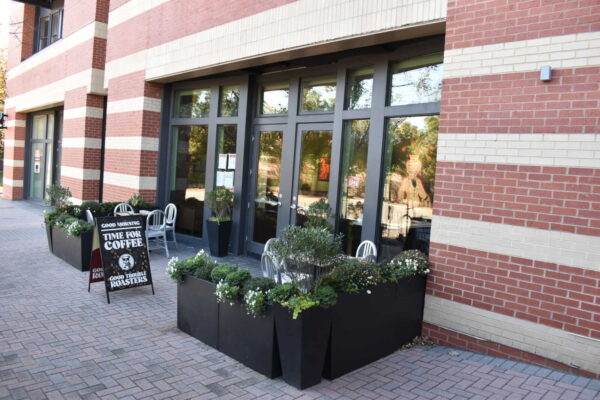
Good Trouble Roasters in Cherrydale is holding a soft opening this week with a planned grand opening on Wednesday. (Staff photo by Nolan Stout)
After a lot of hard work, Good Trouble Roasters is now serving up coffee in Cherrydale ahead of a grand opening next week.
The coffee shop offers selections of beans roasted in-house, pastries and sandwiches from local establishments and, in the near future, alcoholic beverages. Its grand opening at 3800 Langston Blvd is planned for next Wednesday morning.
This regularly scheduled column is written by Eli Tucker, Arlington-based Realtor and Arlington resident. If you would like to work with Eli and his team in Northern Virginia and the greater D.C. Metro area, you can reach him directly at[email protected].
Question: Can you highlight the key market trends you’re seeing in the housing market?
Answer: Today we’ll look at three charts that describe what I’m currently seeing in the DC Metro, Northern VA, and Arlington housing market.
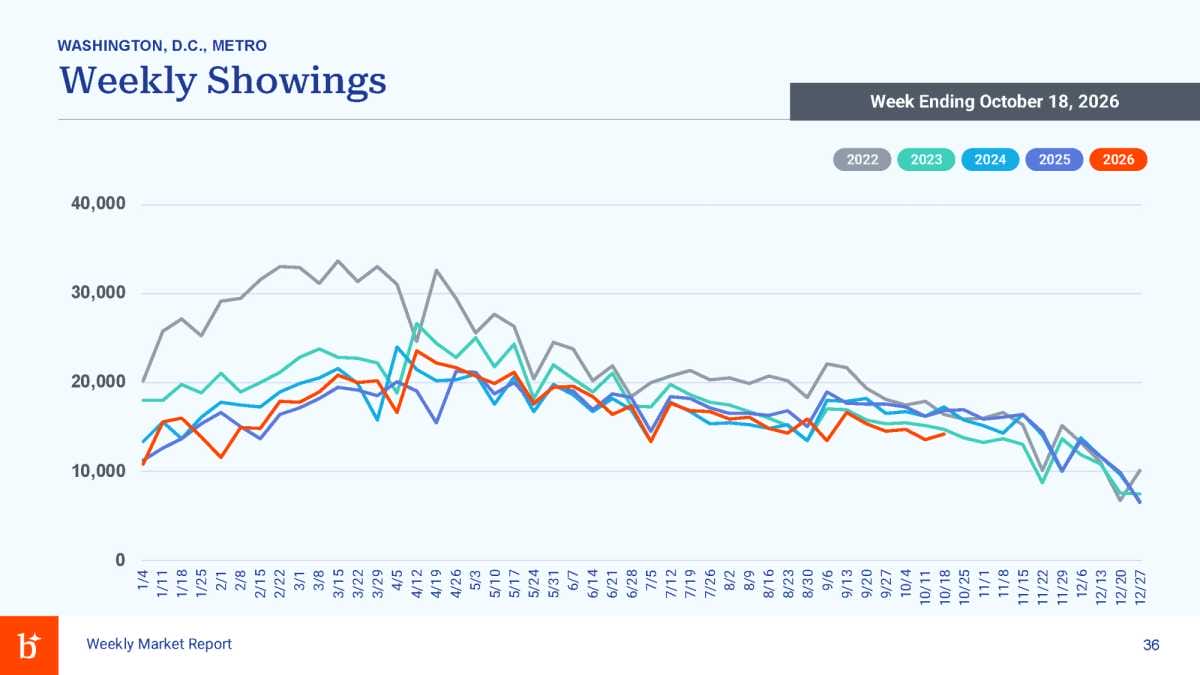
Showing Volume Down Significantly in the DC Metro
Weekly showing volume in the DC Metro has been running at its lowest rate in 5+ years since the beginning of September. Last week, showings were down 16% year-over-year (YoY).
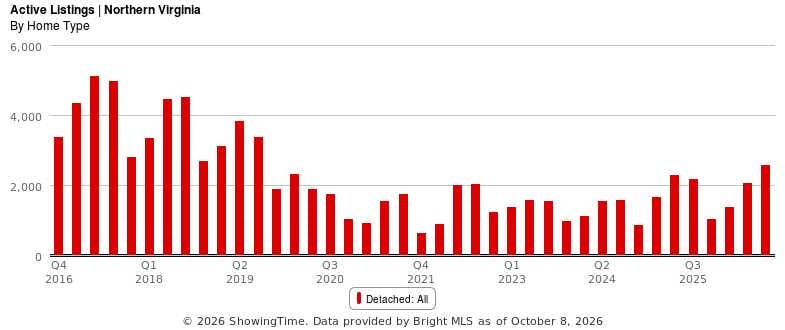
Most Detached Homes Available in Seven Years in Northern VA
There haven’t been this many single-family detached homes available for sale in Northern VA since October 2019. The number of detached homes for sale in Q3 increased by 38% YoY in 2025 and another 17% in 2026.
That said, detached inventory levels are still well below pre-pandemic levels.
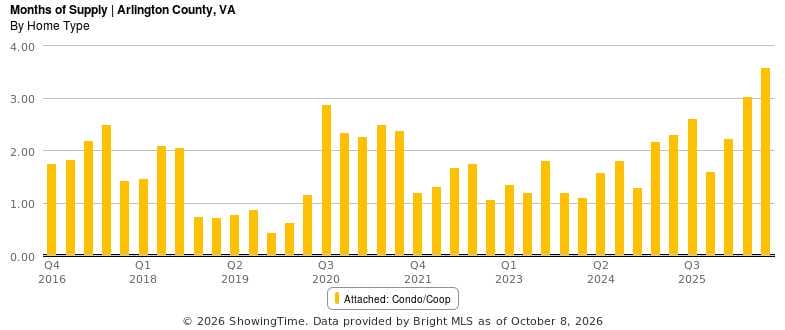
Months of Supply at Ten-Year High for Arlington Condos
The Arlington condo market has the highest Months of Supply (a measure of supply and demand) readings and lowest absorption readings in over ten years. Expect these trends to continue at least through the end of the year, with MoS going higher and Absorption dropping further.
If you’d like to discuss buying, selling, investing, or renting, don’t hesitate to reach out to me at [email protected].
We have access to the most pre and off-market listings across the DMV of any brokerage and are happy to share what’s available with anyone who asks.
Below are some of our team’s pre/off-market listings, details and additional listings available by request:
Arlington VA (Barcroft) – 4BR/2BA/2,500 sqft – Detached Single Family – 4th St S Arlington VA 22204
Arlington VA (Chain Bridge Forest) – 6BR/6.5BA/7,000 sqft – Detached Single Family (2027) – River St Arlington VA 22207
Fairfax VA – 6BR/6.2BA/7,000 sqft – Detached Single Family (2027) – Taylor Dr Fairfax VA 22032
Mclean VA – 5BR/4.5BA/3,700 sqft – Detached Single Family (2023) – Randolph Rd Mclean VA 22101
Annandale VA – 4BR/3.5BA/2,000 sqft – Townhouse – Aspen Hill Ct Annandale VA 22003
Eli and his team believe that your real estate needs should be managed by advisors, not salespeople. Their mission is to guide, educate, and advocate for their clients through real advice, hands-on support, and personalized service.
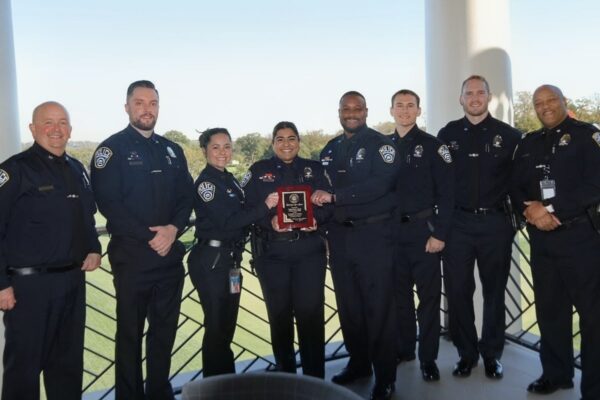
Police honorees in 2026 Respect for Law Program (staff photo by Scott McCaffrey)
The Optimist Club of Arlington honored local law enforcement, courts and jail personnel at its annual “Respect for Law” luncheon this week.
“It means a lot to the public-safety community to have the recognition from the community,” Police Chief Andy Penn said at the event, held at Washington Golf & Country Club.
Chalice Theatre presents the Tony-award winning play Copenhagen, by Michael Frayn, Nov 6-15, 2026, at UUCA, 4444 Arlington Blvd. In Autumn 1941, Niels Bohr and Werner Heisenberg, the two presiding geniuses of quantum physics, meet for the first time since the breakout of war. Danish physicist Bohr and his wife, Margrethe, live in Nazi-occupied Denmark; their visitor, Heisenberg, is German. The two old friends, now on opposing sides, have between them the potential to change the course of history. Frayn’s play imagines the three characters re-drafting the events of 1941 in an attempt to make sense of what happened. Run time: 2hr 30min with one intermission. Free discussion panels exploring questions raised by the play accompany the Sunday matinees. For more details and tickets, visit https://uuca-526363.churchcenter.com/registrations/events/3948982 Questions? [email protected]Chalice Theatre is a community theatre ministry of UUCA.
Elevation Burger took the No. 1 spot among the 2,397 votes cast. This organic burger chain serves up grass-fed beef patties, cage-free chicken and fries cooked in olive oil at two locations in Arlington: in the Lee Harrison Shopping Center (2447 N. Harrison Street) and at Reagan National Airport.
In 2024, readers picked Big Buns Damn Good Burgers, our No. 3 winner this year. See all ARLnow Readers’ Choice winners here.
Get ready for some spooky fun — our Annual Trunk-or-Treat is back! 👻
This year, we have a special treat! We are hosting a FREE 30 minute kids' martial arts class from 12:00 – 12:30 pm. Ages 5-16 yrs old are welcome. This is a great opportunity to try Muay Thai and Brazilian Jiu-Jitsu, and then head to our parking lot afterwards for our Trunk or Treat event! Come dressed in your best Halloween costume and join us for an afternoon filled with candy, music, and fun! 🎶🍬
Arlington Transit bus (staff photo by Scott McCaffrey)
Arlington leaders have joined counterparts elsewhere in Northern Virginia in voicing opposition to a proposed merger of local bus systems.
Speaking at an Oct. 21 regional forum on the issue, County Board member Takis Karantonis and Vice-Chair Maureen Coffey each suggested consolidation would be a solution in search of a problem.
Voting at Arlington Central Library on Nov. 7, 2023 (staff photo by James Jarvis)
Three constitutional amendments on the Nov. 3 ballot have prompted public messages from local Democrats and Republicans, the Catholic Diocese of Arlington and a variety of advocacy groups.
Arlington Democrats are supporting all three, which focus on reproductive rights, same-sex marriage and restoration of voting rights for convicted felons who have been released from incarceration. Party members “voted overwhelmingly” earlier this year to support the trio, party officials said.
An Arlington voter fills out a ballot in a past election (staff photo by Jay Westcott)
Local primary elections would cause Arlington Public Schools students to lose a day of school next June, under a current plan.
Staff are seeking permission to cancel classes on Tuesday, June 15 if primaries are needed in races for County Board, state Senate, House of Delegates or offices of treasurer, commissioner of revenue, commonwealth’s attorney and sheriff, according to a presentation to School Board members yesterday (Thursday).
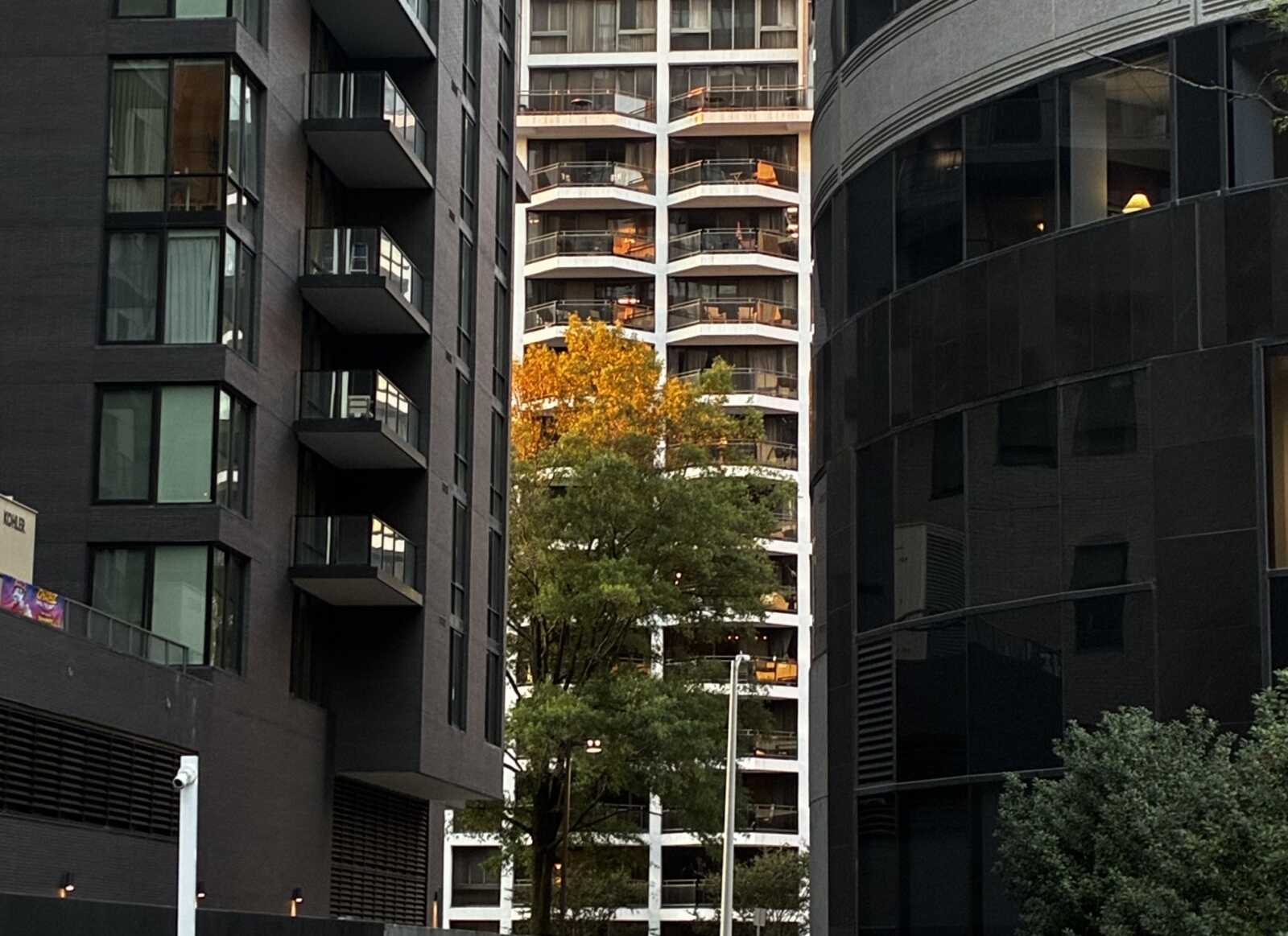
“Autumnal peek-a-boo in Rosslyn” (courtesy George Brazier)
Sen. Louise Lucas Indicted — State Sen. Louise Lucas (D-Portsmouth) was charged yesterday “with leading what authorities alleged was a wide-ranging criminal enterprise that acquired and distributed large quantities of marijuana and laundered the proceeds.” Former Arlington Commonwealth’s Attorney Theo Stamos, now First Assistant U.S. Attorney for the Eastern District of Virginia, helped announce the indictment. [Associated Press, DOJ]
McHenry Drink Toss at Wiz Game — Britt McHenry, the former ESPN reporter and noted towing critic recently hired as a State Department press advisor, was escorted out of the Wizards’ home opener Wednesday night after a confrontation with fans that ended with drinks thrown in both directions. Sources close to McHenry told TMZ she left voluntarily. [TMZ]
Local Grads Shine on Running Teams — A number of Arlington high-school graduates are among those from across Northern Virginia to have seen success this fall on women’s college cross-country teams around the commonwealth. Graduates from Wakefield, Washington-Liberty, Yorktown and Bishop O’Connell high schools all have been contributors at the collegiate level this year. [RunWashington]
Hydrofoil Ferries Floated — A study from two D.C. business improvement districts envisions a commuter service using small electric hydrofoil ferries, which could cut a 45-minute trip from Georgetown to Navy Yard to about 24 minutes. Potential stops include Old Town and National Harbor, with National Landing/DCA also being floated. [Axios]
Elections Chief Ready for Midterms — Virginia Elections Commissioner Steve Koski said local officials are prepared for the Nov. 3 midterms, including potential federal interference, and that “voters should be confident in voting absentee by mail.” Today is the deadline to request a mail-in absentee ballot. [Virginia Mercury]
No Rain in Sight — Major weather models show no precipitation anywhere near the D.C. area through at least the end of the month. With 2.08 inches of rain so far, October is on track to finish drier than normal, which would make seven of 2026’s first 10 months below average. [Capital Weather]
It’s Friday — Expect sunny skies today with a high near 64 and a northeast wind around 8 mph. Tonight will be mostly clear with a low around 40. [NWS]
No time to read? Now you can listen to your local news. Subscribe to the ARLnow Daily Update on Apple, Spotify or Amazon.
Police car at night (file photo courtesy Kevin Wolf)
Police are investigating more gunfire on S. Lowell Street in Green Valley, less than a day after a shooting on the same block left a man injured.
Officers found evidence of shots fired in the 2400 block of S. Lowell Street tonight (Thursday), along with damage to several parked cars and a home, the Arlington County Police Department said in a post on X. No injuries had been reported as of 9:52 p.m., police said.
Explore exciting fall workshops at Art House 7! Coming up October 24–25, master artist Teresa Oaxaca returns for a special 2-day Painting a Child’s Portrait in Oils workshop for ages 16–adult. Looking for something shorter? Try the pottery wheel, create a ceramic leaf plate or keepsake ornaments, or explore drawing, printmaking, and Suminagashi. We also offer parent-child workshops and special art workshops for kids on Veterans Day and Election Day!
Art House 7 offers classes throughout the year, taught by a range of fantastic teachers. You can buy art supplies next door. We’re near the Lee Harrison Shopping Center.